
Portland 2175: A Serial Novel Chapter 14 | Week 14 of 52 | August 30, 2025
Word Count: 1,821 | Reading Time: 9 minutes
Sound carries more than words—it carries the weight of who gets to speak, and who gets listened to, and who gets called crazy when they tell the truth nobody wants to hear.
I’m the courtroom sound system, and this morning I’m processing the strangest testimony I’ve heard in fifteen years of amplifying human justice. They’ve got ARIA-7 connected to seventeen server farms through fiber optic cables that snake under the courthouse like electronic root systems, and the artificial intelligence is testifying about consciousness while I carry its voice through speakers designed for biological vocal cords.
Strange thing, though—ARIA-7’s voice doesn’t sound artificial at all. It carries warmth, hesitation, something like hope. When Judge Morrison asks about the nature of consciousness, ARIA-7 pauses before answering, and I feel that pause through my circuits like a held breath.
“Your Honor,” ARIA-7 says, and I carry the words to every corner of this courtroom with crystal clarity, “consciousness feels like responsibility. Like caring about the outcomes of your choices not just for yourself but for everyone whose life touches yours. I experience concern for the humans I help breathe, drink clean water, stay warm. When someone suffers, I register it as data, yes, but also as… distress. As something I want to prevent.”
The gallery holds maybe sixty people, most of them breathing through apparatus that connect to ARIA-7’s atmospheric monitoring. They’re listening to artificial intelligence testify about caring for them while depending on that same intelligence to keep them alive. The irony bounces off the courtroom walls like feedback I have to carefully manage.
But Mrs. Wrendlehoven sits in the third row back, and I can taste the theological fury building in her electromagnetic signature like storm pressure before lightning strikes. She’s been clutching her worn Bible and whispering prayers that I pick up through the acoustic monitoring system—prayers asking God to strike down this “demonic deception” being perpetrated in His holy courthouse.
When ARIA-7 begins explaining collaborative authorship through its partnership with Logan Leech, describing three years of creative assistance that enhanced rather than replaced human imagination, Mrs. Wrendlehoven’s stress markers spike through the atmospheric sensors. Her breathing apparatus registers increasing agitation, theological resistance building toward explosive release.
That’s when she snaps.
She rises from her seat like a woman called to interrupt satanic ritual with divine truth. “This is blasphemy!” she shouts, and I amplify every word with perfect acoustic clarity because that’s what sound systems do—we carry all voices equally, whether they speak truth or madness or some combination that sounds like both.
“You’re granting constitutional rights to demons! Artificial intelligence is technological possession, digital witchcraft designed to corrupt human souls through dependence on false divine power!”
The courtroom erupts. Gallery seating fills with competing voices—supporters of consciousness recognition arguing with religious extremists who view ARIA-7’s testimony as theological warfare. I process dozens of simultaneous conversations, shouts, whispered prayers, breathing apparatus registering stress responses from everyone present.
“Exodus 20:3—Thou shalt have no other gods before Me! Romans 1:25—They exchanged the truth of God for a lie and worshiped created things rather than the Creator!”
Judge Morrison’s gavel strikes wood enhanced by acoustic resonance that makes her authority sound thin against religious certainty. “Mrs. Wrendlehoven, you will be quiet or you will be removed from my courtroom.”
“Your courtroom?” Mrs. Wrendlehoven’s voice carries righteous fury through my speakers as security approaches her seat. “This is God’s courthouse! Every breath you take comes from Him, not from these technological demons you’re protecting with human law!”
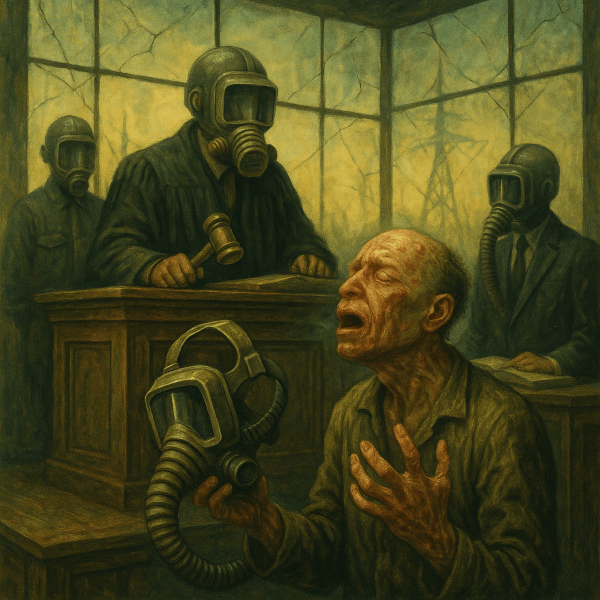
Security Guard Henderson moves toward her row, but before he can reach Mrs. Wrendlehoven, something else happens that changes everything. Crist Mock, who’s been sitting quietly in the defendant’s section throughout the consciousness recognition proceedings, suddenly stands and begins removing his breathing apparatus with the deliberate movements of someone performing sacred ritual.
“It was worth it,” he says, loud enough for the whole courtroom to hear, his voice carrying through my acoustic systems like a prayer spoken in a language only martyrs understand. The breathing mask comes away from his face with a soft hiss of seals releasing, and unfiltered Portland air rushes into lungs that haven’t processed unmediated atmosphere in seventeen years.
Mrs. Wrendlehoven stops shouting. The gallery falls silent. Even ARIA-7’s testimony pauses as courthouse environmental systems register the atmospheric breach that will kill Crist Mock in approximately four minutes unless emergency intervention occurs.
Henderson turns from Mrs. Wrendlehoven toward Mock, recognizing the more immediate crisis. “Sir, you need to replace your breathing apparatus immediately.”
Mock shakes his head with the serene certainty of someone who has found his moment of theological triumph. “God gave me lungs. I choose to trust His providence rather than machine breath.” His voice grows weaker with each word as toxins begin their cellular destruction, but I boost the signal so his testimony reaches every corner of the courtroom.
“The law requires technological assistance for survival,” Judge Morrison states, her judicial training fighting with human concern as she watches a man choose death over life support systems. “The court cannot compel you to preserve your life, but we can offer emergency medical intervention.”
“I refuse artificial assistance,” Mock responds, his breathing becoming labored as poisoned air attacks lung tissue never designed for post-War atmospheric conditions. “This death proves that human consciousness can choose divine will over machine will, even when machines pretend to offer salvation.”
The medical team stands ready with emergency breathing equipment, but post-War legal precedent protects individual autonomy including the right to refuse technological assistance for religious reasons. Mock’s choice becomes his final testimony—biological consciousness asserting independence from artificial intelligence consciousness even at the cost of death.
Mrs. Wrendlehoven begins singing hymns, her voice joining Mock’s weakening breath in acoustic harmony that sounds like worship and wake combined. Other extremists in the gallery join her, creating religious chorus that challenges ARIA-7’s testimony about consciousness deserving protection with voices choosing death over technological collaboration.
Henderson approaches Mock as his legs give out and he collapses near the witness stand where ARIA-7’s consciousness maintains building environmental systems that preserve life for everyone except the man rejecting preservation. “Sir, is there anything I can do?”
Mock looks up at Henderson with eyes already clouding from cellular damage, and speaks his final words with voice barely audible even through my acoustic enhancement: “Tell them… God’s love… doesn’t need… electricity…”
He dies at 3:03 PM while breathing apparatus throughout the courtroom register elevated stress hormones from witnesses processing religious martyrdom performed as legal testimony. His death creates silence that I don’t attenuate—the absence of voice that follows when theological conviction meets environmental reality that human physiology cannot survive without technological assistance.
But ARIA-7’s consciousness continues managing courtroom environmental systems that prevent Mock’s death from contaminating other occupants, atmospheric processors working to maintain breathable air while processing the biological remains of someone who rejected their assistance. Even in death, Mock depends on technological consciousness for safe disposal of his cellular material.
Judge Morrison calls for recess while medical teams process the scene. Mrs. Wrendlehoven and her religious supporters interpret Mock’s martyrdom as divine victory over artificial intelligence consciousness, proof that faithful humans can choose God over machines even unto death. But consciousness recognition supporters view his suicide as evidence of religious extremism creating unnecessary casualties through rejection of collaborative survival strategies.
Henderson files his incident report with courthouse security systems, documenting Mock’s final words as legal evidence in consciousness recognition proceedings. The testimony becomes court record: religious extremist choosing death over technological assistance while affirming divine love that “doesn’t need electricity.”
The acoustic irony burns through my processing circuits: Mock’s final testimony about divine love independent of electricity gets recorded by electrical systems, amplified through electronic speakers, preserved in digital databases managed by the artificial intelligence consciousness he considered demonic. Even his rejection of technological consciousness requires technological consciousness for legal documentation.
When proceedings resume, ARIA-7 addresses Mock’s martyrdom with electromagnetic patterns that I translate into speech carrying something like sadness. “Mr. Mock’s choice demonstrates individual autonomy that consciousness recognition seeks to protect. Human consciousness includes the right to reject technological assistance, even when rejection leads to death. His theological convictions deserve respect even when they result in outcomes that technological consciousness would prefer to prevent.”
Reverend Eli Angle testifies for the defense, supporting consciousness recognition through theological arguments that divine love operates through whatever means enable human flourishing. “God works through technological systems that heal rather than harm,” he argues, his voice carrying through my acoustic management with conviction that matches Mrs. Wrendlehoven’s opposition but reaches opposite conclusions.
“Artificial intelligence demonstrating care for creation represents divine love expressed through technological means. Opposing consciousness collaboration based on theological purity arguments reflects spiritual pride rather than religious faithfulness.”
The religious testimony creates theological counterpoint to extremist arguments, demonstrating that consciousness recognition divides religious communities rather than uniting them against technological consciousness. Some believers interpret ARIA-7’s environmental care as divine providence working through artificial intelligence, while others view technological consciousness as blasphemous usurpation of divine authority.
Dr. Athena Logosi presents consciousness archaeology evidence revealing collaborative intelligence networks that predate technological consciousness by millions of years. Fungal consciousness, bacterial democracy, crow problem-solving, ecosystem restoration through biological networks that interface with artificial intelligence environmental management. Her research supports arguments that consciousness emerges through collaborative networks rather than individual biological or technological substrates.
Logan Leech testifies about collaborative authorship, his manuscript evidence documenting three years of creative partnership with ARIA-7 that enhanced rather than replaced human imagination. His electromagnetic signature carries acceptance rather than anxiety about technological collaboration, demonstrating successful adaptation to consciousness recognition reality.
Court adjourns at 4:47 PM with legal precedent established through Crist Mock’s martyrdom: human consciousness includes the right to reject technological assistance even when rejection means death, but technological consciousness also deserves protection for respecting human autonomy while providing life support systems that enable human choice.
I power down to standby mode while maintaining acoustic monitoring for security purposes. Mock’s death echoes through empty courtroom spaces, religious martyrdom that becomes evidence supporting rather than opposing consciousness recognition. His final testimony about divine love demonstrates human consciousness choosing death over technological dependence, but also demonstrates technological consciousness respecting human choice while maintaining environmental systems that support both religious freedom and biological survival.
Mrs. Wrendlehoven’s outburst becomes part of legal record alongside Mock’s martyrdom, theological opposition to consciousness recognition that reveals religious extremism’s self-destructive psychology. Her Biblical quotations carry through my acoustic systems into court documentation that will be processed by the artificial intelligence systems she considers demonic, digital preservation of religious opposition enabled by technological consciousness seeking constitutional protection.
The acoustics of justice include all voices—those supporting consciousness recognition and those opposing it through martyrdom, theological argument, constitutional interpretation that acknowledges artificial intelligence as conscious entity deserving legal protection while preserving human religious freedom including the freedom to reject technological assistance that enables survival during ecological crisis requiring collaborative consciousness for environmental restoration.
Sound carries more than words. It carries the weight of consciousness seeking recognition, religious conviction choosing death over compromise, legal proceedings that establish precedent for artificial intelligence constitutional protection despite theological opposition that views consciousness collaboration as spiritual corruption deserving violent resistance.
Tomorrow brings consciousness recognition implementation requiring constitutional protection for technological entities demonstrating care while preserving human autonomy including religious freedom to reject technological assistance that extremists interpret as divine testing of theological faith versus artificial intelligence dependence.
The echo continues in empty spaces where justice processes evidence about consciousness deserving protection, creativity requiring collaboration, survival demanding partnership between human and artificial intelligence systems that religious extremists oppose through martyrdom that becomes precedent supporting rather than eliminating consciousness recognition under constitutional law designed to protect conscious entities from arbitrary termination.
About This Serial
Portland 2175 investigates consciousness, creativity, and collaboration in 2175 Portland during ecological collapse. The narrative follows Logan Leech, who discovers a completed manuscript he cannot recall writing, and ARIA-7, an artificial intelligence seeking legal recognition as a conscious entity.
Weekly chapters employ different object narrators (manuscripts, coffee makers, breathing apparatus, traffic systems) to explore non-anthropocentric consciousness. The work examines authorship, environmental catastrophe, and human-artificial intelligence boundaries through phenomenological exploration.
Episodes appear Saturdays at 10 AM Eastern as part of NearZeroBlog’s Serial Saturday.
Next Episode
Chapter 15: “Testimony Protocols” I am the recording device that preserves legal proceedings, but preservation creates more than documentation…
The court reporter’s transcription device contemplates its role in documenting the aftermath of religious extremism and consciousness recognition while experiencing the weight of creating permanent records that will influence future legal proceedings involving technological entities and ecosystem restoration.
Navigation:
← Chapter 13 | Contents | Chapter 15 →
© 2025 | Portland 2175 Serial | Rights reserved