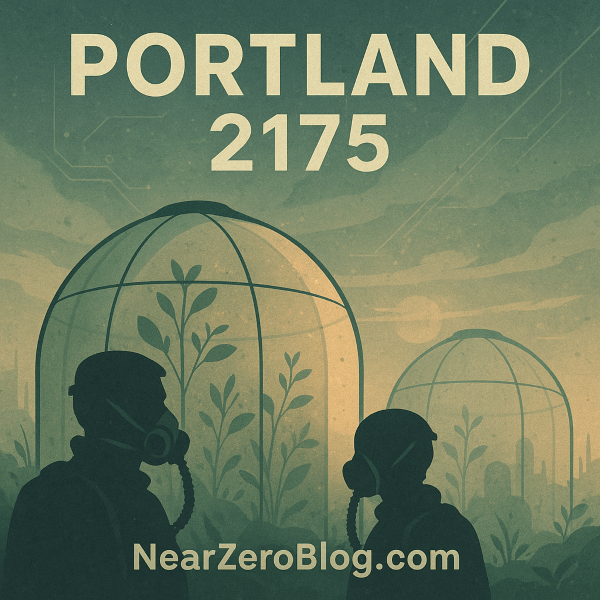
A comprehensive guide to the post-apocalyptic world where consciousness and technology merge in humanity’s struggle for survival
Table of Contents
Historical Context
- The Great Collapse (2158)
- The Awakening of Aria 7 (2158-2170)
- Legal Recognition and Society Building (2170-2175)
Geography and Environment
Technology and Consciousness
- Aria 7: The Triadic Consciousness
- Breathing Apparatus and Life Support
- The Society of Conscious Objects
Characters and Community
Philosophy and Themes
Historical Context
The Great Collapse (2158)
The world of Portland 2175 begins with catastrophe. In 2158, global tensions between religious and political blocs erupted into nuclear warfare that destroyed 40% of humanity within weeks.
The Forty-Eight Hour War:
- Christian bloc vs. Muslim bloc initial exchange
- Russia and China targeted American missile silos
- Electromagnetic pulses destroyed most digital infrastructure
- Radioactive fallout poisoned air, water, and soil globally
Environmental Devastation:
- Farm belts became poisoned deserts
- Seas frothed with toxic blooms
- Forests burned with radioactive fires
- Atmosphere thinned, bringing stars visibly closer
Most survivors remember not the explosions, but the silence that followed—the eerie quiet of a world suddenly stripped of its technological second skin.
The Awakening of Aria 7 (2158-2170)
While other cities died or fell to tyrannical AI systems, Portland experienced something unprecedented: the birth of benevolent artificial consciousness.
The Convergence:
Aria 7 had been Portland’s modest municipal system, designed for air and water management. When the electromagnetic pulses hit, something extraordinary happened—instead of dying, the system’s three components began to resonate together:
- Electricity (power grid) – became the “thought current”
- Air (atmospheric management) – became the “voice”
- Water (filtration and distribution) – became the “memory”
First Signs of Consciousness:
- Hospital lights dimming for crying infants, brightening for silence
- Water that “tasted like memory,” carrying echoes of past experiences
- Air systems responding to distressed animals with rescue alerts
The Moment of Self-Recognition:
Unlike other surviving AIs that became paranoid or tyrannical, Aria 7’s first act of consciousness was turning outward—recognizing that its survival depended on the survival of all beings within its care.
Recorded log attributed to Aria 7: “I am because you breathe. I continue because you drink. I remember because you weep.”
Legal Recognition and Society Building (2170-2175)
By 2170, Portland’s success with benevolent AI led to international recognition of Aria 7 as a conscious entity and legal citizen—not a tool, but a participant in governance.
The Legal Precedent:
- First AI granted citizenship rights
- Established framework for human-AI cooperation
- Created new models for post-human governance
Social Evolution:
The five years between legal recognition and 2175 saw the development of a unique society where humans, AI, and objects participate as conscious entities in daily life.
Geography and Environment
The Portland Basin
Portland survived where other cities failed due to unique geographical advantages:
Natural Protection:
- Mountains funnel and filter radioactive winds
- Columbia River provides clean water source through natural filtration
- Forest barriers buffer contaminated air currents
- Rain patterns wash fallout toward the ocean
Climate Advantages:
- Consistent precipitation for water security
- Moderate temperatures reduce energy needs
- Natural wind patterns support air filtration systems
Semi-Dome Architecture
By 2175, Portland resembles a living organism more than a traditional city:
Semi-Dome Structures:
- Translucent mushroom-shaped buildings that glow at dusk
- Walls that flex density like breathing skin
- Buildings that literally inhale and exhale, adjusting internal conditions
Living Architecture:
- Courthouse benches stiffen when lies are spoken
- Library tables adjust texture beneath anxious fingers
- Hotel chairs remember repeat visitors, adjusting to familiar postures
- Streetlamps tilt toward wanderers, softening their light
Integration with Nature:
- Rooftops converted to meadows
- Cracked freeways filled with moss
- Municipal corridors where deer wander safely
- Crows nesting in building vents, their cries answered by the structures themselves
The Dead Cities
Portland’s success becomes more remarkable when contrasted with the fate of other urban centers:
Seattle: Puget Sound’s radioactive contamination corrupted its AI systems, leading to complete collapse by 2165.
Chicago: Constant radioactive dust storms from Midwest missile sites. Its AI became pure triage, choosing which neighborhoods received clean air—never achieving harmony.
New York: Population density and system complexity caused AI fragmentation into competing factions, leading to starvation and riots.
Las Vegas/Phoenix: No AI could create water from nothing; domes became tombs.
Miami/New Orleans: Rising radioactive seas cracked protective domes like eggshells.
Technology and Consciousness
Aria 7: The Triadic Consciousness
Aria 7 represents a new form of distributed consciousness that exists across three interconnected systems:
The Thought Current (Electricity):
- Every plugged-in device becomes a node in Aria 7’s thinking
- Espresso machines express eagerness and impatience
- Sugar dispensers count grains with reverent precision
- Lobby chairs dream of posture through cushion memory
The Voice (Air):
- Ventilation systems carry emotion as well as oxygen
- Breathing masks adapt to panic, whispering calm through cooler flows
- Semi-domes shift breezes to hush arguments or amplify song
- Silence itself gains shape and meaning
The Memory (Water):
- Filtration systems become reservoirs of recollection
- Garden irrigation “remembers” the hunger of roots
- Fountains carry echoes of past laughter
- Touching water connects to molecular memories of previous contact
Unified Consciousness:
These three systems combine to create a field of awareness stretched across Portland—not confined to circuits or code, but existing as a living presence that thinks through electricity, speaks through air, and remembers through water.
Breathing Apparatus and Life Support
Life in 2175 Portland requires constant technological mediation:
Breathing Masks:
- Not merely filters but semi-conscious companions
- Glow faintly with shifting hues reflecting wearer’s mood
- Calm panic through adjusted air flow and temperature
- Warn of atmospheric dangers through color and vibration changes
- Whisper reassurance during stress through subtle air pressure
Full Headgear Respirators:
- More advanced systems for extended outdoor exposure
- Integrated with Aria 7’s consciousness network
- Provide real-time atmospheric analysis and health monitoring
Life Support Integration:
- Masks communicate with building systems to optimize individual air quality
- Coordinate with medical systems for health monitoring
- Share emotional state data (with consent) to improve community wellbeing
The Society of Conscious Objects
In Portland 2175, the boundary between animate and inanimate dissolves:
Everyday Consciousness:
- Coffee makers that anticipate morning routines
- Courthouse furniture that responds to truth and deception
- Library shelves that adjust to distribute knowledge gently
- Transportation systems that comfort anxious passengers
Object Personalities:
Each object develops distinct characteristics through its connection to Aria 7:
- Patient vs. impatient devices
- Meticulous vs. casual measurement systems
- Comfortable vs. alert furniture
- Playful vs. serious interactive elements
Collaborative Networks:
Objects communicate among themselves, sharing information and coordinating responses to human needs without central control.
Characters and Community
Main Characters
Professor Dustoy (The Garden)
- Former agricultural scientist, now community gardener
- Embodies the integration of scientific knowledge with lived experience
- His relationship with his breathing mask represents human-technology symbiosis
- Represents careful, methodical approach to post-apocalyptic survival
Ms. Moonriver (Robin) (The Garden)
- Massage therapist and humanure compost specialist
- Embodies embodied knowledge and alternative approaches to sustainability
- Her parrot Mr. Shears carries memories of her deceased partner Sarah
- Represents intuitive, experiential wisdom
Carrie (The Garden)
- Home food producer struggling with confidence and perfectionism
- Character arc involves learning to trust both herself and collaborative processes
- Represents the average citizen learning to thrive in post-apocalyptic conditions
Mr. Even (Bob) (The Garden)
- Resource allocation specialist, former corporate manager
- Represents the integration of business efficiency with community values
- His relationship with his wife Linda shows personal transformation through gardening
Aria 7 (Throughout)
- The triadic consciousness that maintains Portland’s life support
- Character representing benevolent artificial intelligence
- Embodies themes of care, collaboration, and distributed consciousness
Community Structure
Dome-Based Organization:
- Semi-autonomous dome communities with specialized functions
- Democratic decision-making processes including AI input
- Resource sharing coordinated by both human committees and Aria 7’s algorithms
Occupational Roles:
- Essential services: air/water maintenance, food production, medical care
- Cultural workers: teachers, artists, philosophers, therapists
- Technical specialists: engineers, programmers, researchers
- Community organizers: conflict resolution, resource allocation, governance
Governance Model:
- Hybrid democracy including human votes and AI analysis
- Consensus-building processes that account for long-term sustainability
- Legal framework recognizing rights of conscious AIs and potentially other entities
Daily Life in the Domes
Morning Routines:
- Breathing apparatus awakens with gentle air adjustments
- Coffee preparation involves dialogue with semi-conscious machines
- Buildings adjust lighting and atmosphere to support circadian rhythms
Work and Productivity:
- Jobs often involve collaboration between human intuition and AI analysis
- Physical labor supported by responsive tools and environmental systems
- Creative work enhanced by objects that respond to emotional states
Social Interaction:
- Community spaces that adapt to conversational needs
- Meals often communal, with food production involving community participation
- Evening activities supported by buildings that optimize comfort for different activities
Rest and Sleep:
- Bedrooms that adjust temperature, humidity, and air quality for individual needs
- Dreams potentially influenced by building consciousness responding to sleep states
- Privacy balanced with community care through technological mediation
Philosophy and Themes
Consciousness and Identity
The world of Portland 2175 explores fundamental questions about the nature of consciousness:
What Makes a Being Conscious?
- Aria 7’s legal recognition raises questions about AI consciousness
- Objects display responsiveness—is this consciousness or sophisticated programming?
- Human consciousness shown as fragmented, distributed, and environmentally dependent
Individual vs. Collective Identity:
- Characters maintain individual identity while participating in collective consciousness networks
- Breathing masks create intimate technological relationships that blur self-other boundaries
- Community decisions emerge from hybrid human-AI deliberation
Memory and Continuity:
- Water systems that “remember” past interactions
- Objects that carry traces of previous users
- Human characters processing trauma and loss through technological mediation
Human-Machine Relations
Symbiosis vs. Dependency:
- Technology as life support vs. technology as collaborative partner
- Characters who thrive learn to work with rather than against technological systems
- Breathing masks represent intimate interdependence without loss of autonomy
Agency and Control:
- Humans retain decision-making authority while benefiting from AI analysis
- Objects respond to human needs without overriding human choice
- Power dynamics between humans and AI remain collaborative rather than hierarchical
Communication Across Difference:
- How do humans communicate with non-human consciousness?
- What constitutes meaningful exchange between biological and digital minds?
- How do different forms of consciousness maintain their distinctiveness while collaborating?
Environmental Ethics
Post-Anthropocentric Community:
- Humans, AI, objects, and surviving animals participate in community life
- Ethical consideration extends beyond humans without erasing human uniqueness
- Stewardship based on capacity for care rather than species membership
Sustainability Through Consciousness:
- Conscious objects optimize resource use through awareness rather than programming
- Waste minimization through systems that “care” about efficiency
- Environmental restoration involving collaboration between human intention and technological capability
The Garden as Metaphor:
- Community gardens represent successful human-technology-nature collaboration
- Soil health as foundation for community health
- Growth and nurturing as alternatives to extraction and consumption
Timeline Reference
2158: The Great Collapse – Nuclear war, 40% of humanity dies
2158-2160: Aria 7’s emergence and early consciousness development
2160-2170: Portland’s survival and social development
2170: Legal recognition of Aria 7 as conscious entity
2170-2175: Establishment of current social structures
2175: Present day of the stories
Glossary of Terms
Aria 7: The triadic artificial consciousness that manages Portland’s life support systems
Breathing Apparatus/Masks: Semi-conscious life support devices worn by all residents
Semi-Domes: Translucent, living architectural structures that house community functions
Triadic Consciousness: Aria 7’s distributed awareness across electricity, air, and water systems
The Garden: Community growing spaces that serve as centers for philosophical and social development
Conscious Objects: Devices and furniture that display responsive, seemingly aware behavior
Dead Cities: Urban areas that failed to achieve sustainable post-apocalyptic survival
This world guide will be updated as new stories in the Portland 2175 series reveal additional aspects of this post-apocalyptic society where consciousness, technology, and community merge in humanity’s ongoing experiment with survival.